
L'impératif de laboratoires durables
La recherche scientifique moderne est indéniablement un moteur d'innovation et de progrès. Pourtant, les laboratoires sont souvent de grands consommateurs de ressources. Ils requièrent d'importantes quantités d'énergie et d'eau et génèrent une quantité considérable de déchets. Par conséquent, la création d'un laboratoire durable n'est plus un simple idéal, mais une nécessité absolue. Cette transition implique de minimiser l'impact environnemental et d'améliorer l'efficacité opérationnelle. Nous devons relever les défis communs et, simultanément, saisir les nouvelles opportunités. Cet article explore ces deux aspects et propose un guide complet à destination des chercheurs et des institutions.
Défis communs en matière de durabilité des laboratoires
La transition vers un modèle de laboratoire durable présente des obstacles spécifiques. Ces défis découlent des exigences inhérentes au travail scientifique. Les comprendre constitue la première étape vers des solutions efficaces.
Consommation d'énergie : un obstacle majeur
Les laboratoires sont réputés pour leur forte consommation énergétique. Leurs équipements spécialisés fonctionnent en continu. Prenons l'exemple des congélateurs à ultra-basse température (ULT). Les hottes aspirantes fonctionnent sans interruption. Les systèmes de chauffage, de ventilation et de climatisation (CVC) maintiennent des conditions précises. Tous ces systèmes requièrent une énergie considérable. Par exemple, un seul congélateur ULT peut consommer autant d'énergie qu'un ménage canadien moyen par an. Les hottes aspirantes rejettent en permanence de l'air conditionné, ce qui augmente significativement les besoins en chauffage et en climatisation. De nombreux laboratoires fonctionnent 24 h/24 et 7 j/7, ce qui aggrave encore leur empreinte énergétique. Réduire ce gaspillage d'énergie s'avère complexe. Cela nécessite d'importantes mises à niveau des infrastructures et, de plus, des changements dans les pratiques quotidiennes.

Utilisation de l'eau : souvent négligée
La consommation d'eau dans les laboratoires est souvent sous-estimée. Les activités de recherche sont fortement dépendantes de l'eau. Les autoclaves l'utilisent pour la stérilisation. Les bains-marie maintiennent la température. Les systèmes d'osmose inverse purifient l'eau. Les systèmes de refroidissement à passage unique sont courants. Ces systèmes consomment constamment de l'eau potable, qu'ils rejettent ensuite comme effluent. Il en résulte un gaspillage d'eau considérable. De nombreux établissements ne disposent pas de système de surveillance de la consommation d'eau en temps réel. Par conséquent, identifier les zones à forte consommation s'avère difficile. Réduire l'empreinte hydrique nécessite donc des interventions ciblées et une prise de conscience des besoins en eau non identifiés.

Production de déchets : un problème persistant
Les laboratoires génèrent divers flux de déchets. Les plastiques y sont prédominants. Pipettes, plaques et tubes jetables sont omniprésents. Les déchets chimiques dangereux posent des défis spécifiques en matière d'élimination. Les déchets biologiques nécessitent une stérilisation spécialisée. La casse de verrerie est fréquente. Les matériaux d'emballage contribuent également à ce volume. De plus, le tri peut s'avérer complexe. Les risques de contamination exigent une manipulation soigneuse. Souvent, les coûts d'élimination sont élevés, ce qui incite à des pratiques moins durables. L'élaboration de stratégies globales de gestion des déchets est donc essentielle. Elle permet de réduire l'impact environnemental et de maîtriser efficacement les coûts.

Gestion des produits chimiques : complexités dangereuses
L'utilisation de produits chimiques est essentielle au fonctionnement des laboratoires. Cependant, une mauvaise gestion de ces produits engendre des risques et une production importante de déchets. Les produits chimiques périmés nécessitent un traitement spécial et les réactifs excédentaires constituent un déchet coûteux. De nombreux laboratoires utilisent encore des substances hautement toxiques. Des alternatives plus sûres et plus écologiques existent. Les chercheurs ont besoin d'une meilleure information et d'un accès à ces options plus sûres. Réduire l'exposition aux risques chimiques est crucial : cela protège le personnel et diminue les risques de contamination environnementale. Ce domaine exige une transformation systémique.
Changement de comportement : surmonter l'inertie
Les solutions technologiques ne constituent qu'une partie de la réponse. Le comportement humain représente un obstacle majeur. Les chercheurs se concentrent souvent sur les résultats scientifiques, et la durabilité n'est pas toujours leur priorité absolue. Les habitudes sont profondément ancrées. Éteindre les lumières ou fermer les vitres des hottes aspirantes peut paraître anodin, mais ces petits gestes s'accumulent. Le manque de sensibilisation contribue à l'inertie. Les incitations aux pratiques durables sont souvent absentes. Promouvoir une culture de la durabilité est essentiel. Cela nécessite une formation continue, ainsi qu'un leadership fort et un soutien indéfectible.

Principales opportunités pour des pratiques de laboratoire durables
Malgré les difficultés, de nombreuses opportunités existent. Les laboratoires peuvent améliorer considérablement leur performance environnementale. Saisir ces opportunités est bénéfique à la fois pour la planète et pour la recherche.
Efficacité énergétique : solutions intelligentes
Les laboratoires peuvent adopter de nombreuses mesures d'économie d'énergie. Le remplacement des congélateurs à très basse température par des modèles plus récents et plus performants permet de réaliser d'importantes économies d'énergie. Un dégivrage régulier améliore les performances. L'abaissement de la température des congélateurs à très basse température de -80 °C à -70 °C permet de réduire la consommation d'énergie de 30%. Les hottes aspirantes intelligentes sont équipées de systèmes de fermeture automatique des vitres et de systèmes à débit d'air variable (VAV), qui adaptent le flux d'air aux besoins. Le passage à un éclairage LED réduit la consommation d'électricité. La mise en place de systèmes de gestion technique du bâtiment (GTB) optimise le chauffage, la ventilation et la climatisation (CVC). Ces technologies réduisent considérablement l'empreinte carbone d'un laboratoire. Pour des stratégies complètes, le programme « Chimie verte » de l'Agence américaine de protection de l'environnement (EPA) offre des informations précieuses.

Conservation de l'eau : approches innovantes
Réduire la consommation d'eau est possible. L'installation d'autoclaves et de lave-verrerie économes en eau y contribue. Le remplacement des systèmes de refroidissement à passage unique par des refroidisseurs à recirculation est très efficace, car ces systèmes réutilisent l'eau. Le remplacement des robinets et accessoires par des modèles économes en eau minimise le gaspillage. La mise en place d'un système de purification d'eau au point d'utilisation réduit le recours aux grands systèmes d'osmose inverse centralisés, limitant ainsi le gaspillage d'eau. De plus, le suivi de la consommation d'eau permet d'identifier les inefficacités. Sensibiliser le personnel à une utilisation responsable de l'eau est également important. Ces changements permettent de réaliser d'importantes économies d'eau et de réduire les coûts énergétiques.

Réduction et valorisation des déchets : principes de l'économie circulaire
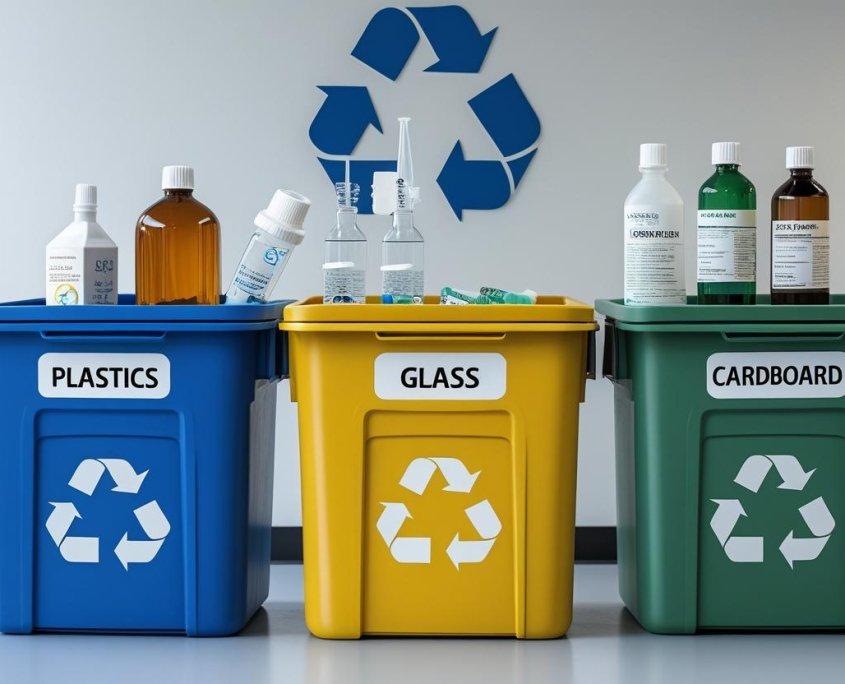
Les laboratoires peuvent adopter les principes de l'économie circulaire. Cela permet de minimiser les déchets envoyés en décharge. La mise en place de programmes de recyclage efficaces pour les plastiques, le verre et le carton est essentielle. TerraCycle propose des solutions de recyclage spécialisées pour les plastiques de laboratoire difficiles à recycler. La réutilisation de certains articles de laboratoire est possible. Par exemple, certaines boîtes d'embouts de pipettes sont réutilisables. Le don de produits chimiques ou d'équipements excédentaires utilisables permet de lutter contre le gaspillage. L'étude des programmes de récupération des solvants permet de réduire le volume de déchets dangereux. Un tri approprié à la source est primordial. Il garantit que les matériaux sont réellement recyclables. Ces stratégies sont bénéfiques pour l'environnement et permettent également de réduire les coûts d'élimination.
Chimie verte et approvisionnement : une science plus sûre
L'adoption des principes de la chimie verte favorise le développement durable. Cela implique de concevoir des produits et des procédés qui minimisent l'utilisation de substances dangereuses. L'utilisation de réactifs moins toxiques réduit les déchets chimiques. Le remplacement des solvants dangereux par des alternatives plus écologiques est essentiel. Cela diminue les risques pour les chercheurs et réduit l'impact environnemental. De plus, la mise en œuvre de politiques d'approvisionnement durables est vitale. Privilégier les produits contenant des matériaux recyclés réduit la demande en nouvelles ressources. Choisir des équipements économes en énergie réduit les émissions opérationnelles. Sélectionner des fournisseurs engagés dans des pratiques durables favorise un changement plus global. Cette transition crée des laboratoires plus sûrs et est bénéfique pour la planète.

Engagement et éducation : promouvoir une culture verte
L'implication du personnel de laboratoire est essentielle à la réussite en matière de développement durable. Des formations régulières permettent de mieux faire connaître les bonnes pratiques. Sensibiliser le personnel à l'impact de ses actions est crucial. Des gestes simples, comme fermer les vitres des hottes aspirantes, permettent de réaliser des économies d'énergie. Éteindre les appareils lorsqu'ils ne sont pas utilisés est également bénéfique. La création de comités “ Laboratoire vert ” favorise l'adhésion. Reconnaître et récompenser les comportements durables encourage le changement. Le soutien de la direction est indispensable : il témoigne de l'engagement de l'institution. Développer une solide culture de sécurité implique naturellement une responsabilité environnementale accrue. Une culture du développement durable est un moteur d'amélioration continue et garantit un succès à long terme.

Stratégies pour la mise en œuvre de laboratoires durables
La mise en œuvre d'une stratégie de laboratoire durable exige une approche systématique. La planification et l'engagement sont tous deux essentiels.
Réaliser un audit de durabilité du laboratoire
Commencez par une évaluation approfondie. Réalisez un audit complet des pratiques actuelles. Évaluez les profils de consommation énergétique. Mesurez la consommation d'eau. Quantifiez les flux de déchets par type. Recensez les produits chimiques utilisés. Identifiez les équipements inefficaces. Cet audit fournit des données de référence. Il permet d'identifier les principaux axes d'amélioration. Par conséquent, vous pouvez prioriser efficacement les interventions. Cette étape initiale jette les bases d'une démarche durable et oriente toutes les initiatives ultérieures du laboratoire.

Définir des objectifs et des indicateurs clairs
Établissez des objectifs SMART (Spécifiques, Mesurables, Atteignables, Réalistes et Temporellement définis). Par exemple, visez à réduire la consommation d'énergie des centrales thermiques de 201 tonnes en deux ans. Fixez des objectifs de valorisation des déchets. Définissez des indicateurs de performance pour la conservation de l'eau. Suivez régulièrement les progrès accomplis par rapport à ces objectifs. Cela garantit la responsabilisation et témoigne de la réussite. Des indicateurs clairs motivent le personnel et facilitent la prise de décision. Un reporting transparent des progrès renforce la confiance et l'engagement envers les initiatives de développement durable.
Tirer parti de la technologie et de la conception intelligente
Adoptez les technologies innovantes. Investissez dans des équipements écoénergétiques. Utilisez des systèmes de gestion intelligente des bâtiments. Explorez des solutions de surveillance en temps réel des fluides. Concevez les nouveaux laboratoires en intégrant le développement durable dès leur conception. Privilégiez la lumière naturelle. Prévoyez une ventilation efficace. Choisissez des matériaux durables et écologiques. Lors des rénovations, recherchez les possibilités d'améliorations durables. La conception intelligente des armoires de laboratoire peut également contribuer à cet objectif. Ces éléments minimisent l'impact environnemental et optimisent considérablement les coûts d'exploitation.
Mobiliser les parties prenantes et établir des partenariats
La durabilité est un effort collectif. Impliquez tout le personnel de laboratoire, des chercheurs principaux aux techniciens. Sollicitez l'avis de la direction des installations. Collaborez avec les équipes d'approvisionnement. Établissez des partenariats avec des entreprises spécialisées dans la gestion des déchets. Échangez avec des établissements homologues et des groupes industriels. Partagez les meilleures pratiques. Inspirez-vous des réussites des autres. Les partenariats externes apportent une expertise précieuse et permettent de mutualiser les ressources. L'établissement de relations solides garantit un large soutien et favorise un engagement commun en faveur de la création de laboratoires plus écologiques à Toronto et ailleurs.
Conclusion : Ouvrir la voie à un avenir plus vert pour la recherche
Créer un laboratoire durable est un défi de taille, mais ô combien gratifiant. Cela implique de surmonter d'importants obstacles liés à la gestion de l'énergie, de l'eau, des déchets et des produits chimiques. De plus, cela exige un changement fondamental des comportements et de la culture. Cependant, les possibilités d'impact positif sont immenses. En adoptant des technologies écoénergétiques, des stratégies de conservation de l'eau, une gestion efficace des déchets, la chimie verte et une implication active, les laboratoires peuvent réduire considérablement leur empreinte environnementale. Cet engagement est bénéfique pour la planète. Il améliore également l'efficacité opérationnelle et la sécurité des travailleurs. Investir dans des pratiques de laboratoire durables, c'est investir dans l'avenir de la recherche. Cela contribue à garantir que le progrès scientifique soit aussi respectueux de l'environnement.

Dernières nouvelles
 Phenolic Resin Countertop Maintenance & Cleaning Guide2026-10-19 - 13:11
 Caractéristiques essentielles des bancs d'habillage performants destinés aux salles blanches européennes2026-07-15 - 11:03
 Avantages de l'utilisation de tables pour salles blanches dans les laboratoires : guide à l'intention des responsables de la planification et des concepteurs de laboratoires2026-06-27 - 21:19
 Les 10 principaux fabricants de mobilier de laboratoire en Chine (mise à jour 2026)2026-06-22 - 21:03

