Ceramic Laboratory Worktop

ZH Lab Furniture’s Ceramic Laboratory Worktops are engineered for laboratories that demand the highest levels of chemical resistance, heat resistance, and long-term durability. Manufactured from natural inorganic minerals and fired at temperatures above 1250°C, these ceramic lab countertops offer exceptional resistance to acids, solvents, stains, and thermal shock up to 1500°C. Their non-porous surface prevents chemical absorption, bacterial growth, and discoloration, ensuring reliable performance for more than 12 years in demanding environments. Ideal for chemical analysis laboratories, pharmaceutical facilities, research institutes, and materials science laboratories, our ceramic laboratory worktops are available in custom sizes and configurations for laboratory benches, fume hoods, wall benches, and island workstations.

Ceramic Laboratory Worktop

The Premium Worktop for the Most Demanding Lab Environments

In high‑requirement laboratories such as chemical analysis, biopharmaceuticals and materials science, the worktop material directly affects result accuracy, instrument stability and staff safety. Ceramic worktops – made from natural inorganic minerals fired at ultra‑high temperatures – provide extreme chemical resistance, outstanding thermal stability and excellent physical durability. They are becoming the preferred choice for high‑end laboratories.

ZH Labs Furniture supplies high‑quality ceramic laboratory worktops. Manufactured using a solid‑core, single‑firing process, standard thickness 20mm, fully customizable in size. Suitable for central benches, wall benches, fume hood work surfaces and fume hood butterfly‑shaped tops.

Core Manufacturing Process: Fired at 1550°C

Laboratory ceramic worktops are not ordinary tiles or daily ceramics. We select high‑quality kaolin, feldspar and other natural minerals, formulate them scientifically, and apply a specially developed corrosion‑resistant glaze. The key step is firing at 1550°C – not just surface glazing, but molecular‑level fusion between glaze and body.

ZH Labs standard: German‑imported glaze formula, fired at 1550°C for extended time. Glaze and substrate become one, eliminating any risk of crazing, peeling or detachment caused by thermal cycling, humidity or daily wear.

The resulting surface is an inorganic glassy structure, completely non‑porous and permanently stable. This is the fundamental difference between ceramic and organic materials like epoxy resin or phenolic resin.
Ceramic Laboratory countertop

Cremic Lab Worktop Specifications & Customization

Standard ThicknessStandard ColorsSurface FinishMax Panel SizeAccessories
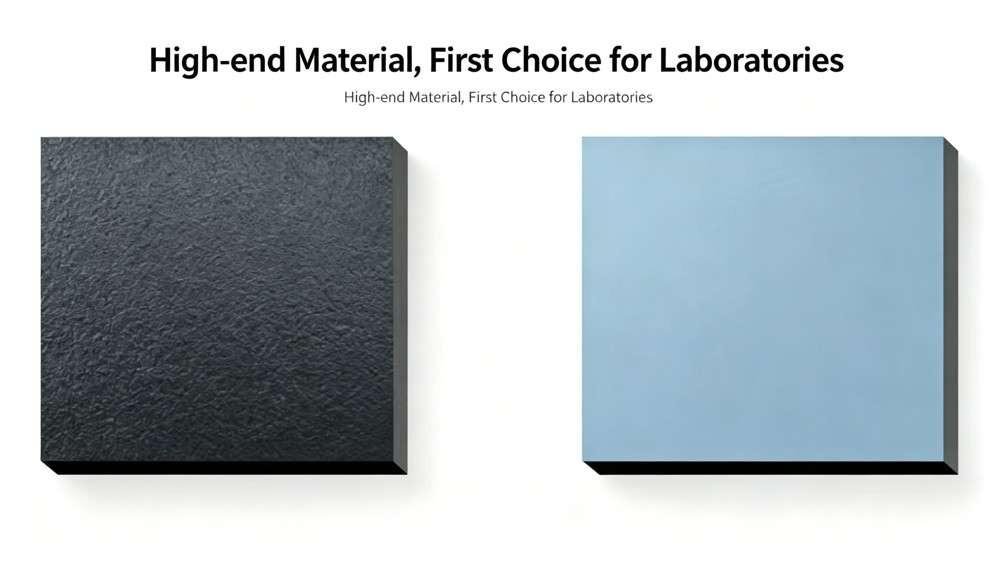
15mm, 20mmBlack, blueMatt glaze3000*750mm

1800*800mm

1600*900mm

Match ceramic sink /cup

Benefits of Ceramic Laboratory Worktops

1. Exceptional Chemical Resistance for Laboratory Applications

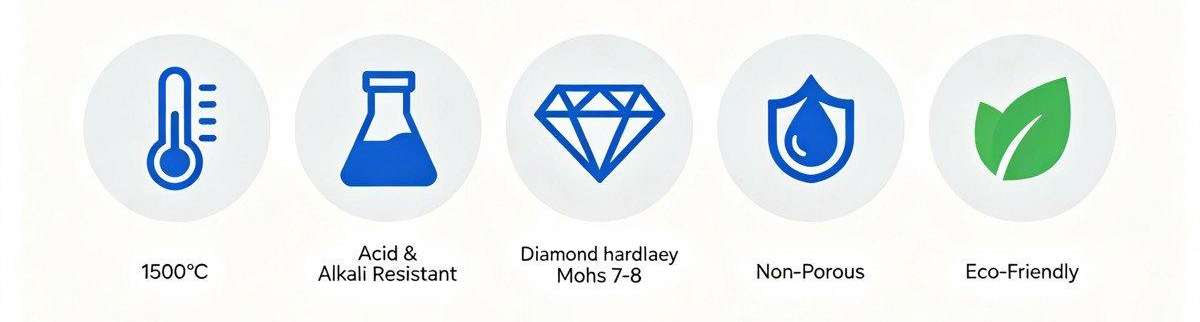
Ceramic laboratory worktops offer some of the highest levels of chemical resistance available for modern laboratories. Their non-porous surface resists virtually all acids, alkalis, and organic solvents, with the exception of hydrofluoric acid (HF). Unlike porous materials, spills remain on the surface for easy cleanup, helping maintain a hygienic laboratory environment. Ceramic worktops also achieve a SEFA chemical resistance rating of 5, showing no visible change after 24-hour chemical exposure testing.

2. Superior Heat Resistance and Thermal Shock Performance

Ceramic lab countertops are engineered to withstand extreme temperatures that would damage most alternative worktop materials. They tolerate continuous exposure to temperatures between 600°C and 800°C and can withstand thermal shock up to 1500°C without burning, blistering, or cracking. Their low thermal expansion rate minimizes deformation under rapid temperature changes, making them ideal for laboratories using hot plates, furnaces, crucibles, and high-temperature testing equipment.

3. High Strength, Hardness, and Long-Term Stability

Ceramic laboratory countertops provide outstanding mechanical strength and dimensional stability. With a Mohs hardness rating of 7–8, the surface resists scratches from laboratory glassware, scalpels, and routine equipment use. The rigid structure supports heavy instruments without sagging or deformation, while excellent flatness ensures long-term stability for analytical equipment, measuring devices, and precision laboratory operations.

4. Non-Porous, Hygienic, and Easy to Maintain

The non-porous surface of ceramic laboratory worktops prevents liquids, contaminants, and microorganisms from penetrating the material. This helps reduce the risk of bacterial growth, cross-contamination, and staining. Ceramic surfaces are also resistant to UV exposure and chemical discoloration, maintaining their appearance for years. Daily maintenance typically requires only a neutral cleaner and soft cloth, with no sealing, waxing, or special treatments needed.

5. Safe, Sustainable, and Environmentally Friendly

Ceramic laboratory countertops are manufactured from natural inorganic materials and contain no toxic substances. They remain stable even under extreme temperatures and do not release harmful gases during use. As a non-combustible material with excellent electrical insulation properties, ceramic is widely used in chemical, pharmaceutical, electronics, and research laboratories. At the end of its service life, the material can also be recycled, supporting sustainable laboratory design practices.

core features of Ceramic Laboratory Worktop

Applications: Which Labs Need Ceramic Worktops?

Application ReasonReason
Chemical analysis & R&D labsFrequent contact with strong acids, alkalis, solvents – ceramic offers top chemical resistance
University & research labsMixed experiments, high traffic, moving equipment – high scratch & wear resistance needed
Pharmaceutical & biology labsNon‑porous surface prevents bacteria; meets GMP; easy to disinfect
Materials science & high‑temperature labsHot equipment (muffle furnaces, hot presses) – ceramic withstands >800°C without deformation
Fume hood working areasCan be made into butterfly spill‑stop design to prevent liquid overflow
QC & testing labsFrequent reagent changes – stain‑proof, easy cleaning, no permanent marks

Matching ceramic sinks and cup sinks – same material and process – eliminate corrosion, staining and hidden dirt typical of stainless steel or polymer sinks.