
 https://www.zhlabsfurniture.com/wp-content/uploads/2023/03/portable-15-minute-eyewash-station.jpg 400 400 raíz https://www.zhlabsfurniture.com/wp-content/uploads/2026/08/zh-lab-logo-home-1.jpg raíz2023-01-13 13:31:492026-02-06 11:37:00Estación portátil de lavado de ojos
Los técnicos de mantenimiento de laboratorio desempeñan un papel fundamental para garantizar el funcionamiento seguro y eficiente de las instalaciones científicas. Su labor diaria protege tanto al personal como al costoso equipo que se encuentra en estos entornos complejos. La mesa de laboratorio es la estación de trabajo principal para casi todos los procesos científicos. Un mantenimiento adecuado de este mobiliario esencial garantiza una resistencia química fiable, previene la peligrosa contaminación cruzada y maximiza significativamente la vida útil de la inversión. Esta guía completa le proporciona los protocolos y las medidas preventivas necesarias para mantener sus mesas de laboratorio en perfectas condiciones año tras año.
Conclusiones clave
- Identifique el material específico de su mesa de laboratorio antes de aplicar cualquier producto de limpieza.
- Implemente una rutina de limpieza diaria rigurosa para prevenir el grabado químico.
- Evite los estropajos abrasivos que dañan los revestimientos protectores de la superficie.
- Inspeccione los herrajes estructurales y los deslizadores de nivelación trimestralmente.
- Integrar el mantenimiento de los equipos de laboratorio con las comprobaciones más amplias del sistema de seguridad del laboratorio.
Comprensión de los materiales básicos de laboratorio
El primer paso en cualquier estrategia de mantenimiento eficaz consiste en comprender los materiales específicos con los que se trabaja. Las superficies de las mesas de laboratorio modernas están diseñadas para soportar condiciones extremas, pero no son indestructibles. Aplicar la solución de limpieza incorrecta puede comprometer la integridad estructural de la estación de trabajo. Las superficies de encimera de epoxi representan el estándar de la industria en cuanto a alta resistencia química. Estas losas sólidas resisten altas temperaturas y ácidos corrosivos, pero requieren un cuidado específico para mantener su acabado no poroso. La resina fenólica ofrece una excelente resistencia química y durabilidad con un peso menor. Los técnicos deben evitar el uso de herramientas altamente abrasivas sobre la resina fenólica para evitar rayar la capa de desgaste superior. Las estaciones de trabajo de acero inoxidable predominan en entornos clínicos y salas blancas debido a sus propiedades de descontaminación biológica. Sin embargo, el acero inoxidable sigue siendo muy susceptible a los cloruros agresivos y requiere un pulido especializado para acero inoxidable para evitar picaduras y óxido localizados. Al identificar el material exacto de sus mesas de laboratorio, puede adaptar sus protocolos de mantenimiento para proteger la resistencia química y prolongar su vida útil.
Protocolos de limpieza diarios para la protección de superficies
La limpieza diaria constante es el factor más crítico en el mantenimiento del mobiliario de laboratorio. Debe instruir al personal del laboratorio para que limpie sus estaciones de trabajo inmediatamente después de completar los experimentos. Como técnico de mantenimiento, sus rondas diarias deben incluir una inspección minuciosa de las estaciones de trabajo de mayor tránsito. Comience eliminando todos los residuos sueltos con un cepillo de cerdas suaves o un paño de microfibra. Para superficies estándar de resina epoxi y fenólica, utilice un detergente líquido suave mezclado con agua tibia. Aplique la solución con un paño suave o una esponja. Nunca utilice estropajos abrasivos, lana de acero ni cepillos rígidos sobre una encimera de epoxi. Estas herramientas abrasivas crean arañazos microscópicos. Con el tiempo, estas pequeñas abrasiones se acumulan y comprometen la resistencia química de la superficie, permitiendo que los ácidos derramados penetren y degraden el material base. Después de lavar la superficie con el detergente suave, seque completamente la mesa de laboratorio con un paño de microfibra limpio. Dejar agua estancada o soluciones de limpieza sobre la superficie durante la noche puede causar acumulación de residuos no deseados y posible decoloración.
Productos de limpieza recomendados
Elegir los agentes de limpieza adecuados garantiza la durabilidad de los recubrimientos protectores. Para residuos orgánicos, una solución de alcohol isopropílico al 70 % ofrece una excelente capacidad de limpieza sin dañar el aglutinante de resina. Para contaminantes biológicos, una solución estándar de lejía al 10 % es muy eficaz. Sin embargo, es fundamental enjuagar bien la superficie con agua destilada inmediatamente después de usar lejía para evitar la degradación a largo plazo de la encimera de epoxi. Evite disolventes agresivos como la acetona o la metil etil cetona para la limpieza rutinaria. Si bien una mesa de laboratorio de epoxi puede soportar la exposición ocasional a estos disolventes fuertes durante derrames experimentales, la limpieza diaria repetitiva con ellos acabará eliminando el acabado protector y haciendo que la superficie se vea opaca y calcárea.
Gestión de derrames y contaminación química
Los derrames accidentales son inevitables en cualquier instalación científica en funcionamiento. Su rápida respuesta ante estos incidentes afecta directamente la vida útil del mobiliario del laboratorio. Establezca un protocolo claro para que los investigadores notifiquen al equipo de mantenimiento inmediatamente después de un derrame importante. En caso de derrames de ácido, neutralice el área afectada con una base débil como el bicarbonato de sodio antes de intentar limpiarla. En caso de derrames de bases cáusticas, utilice un ácido suave como el ácido cítrico o vinagre diluido para la neutralización. Una vez neutralizado el producto químico de forma segura, absorba el líquido con los materiales adecuados para derrames. Lave bien la superficie de la mesa de laboratorio afectada con agua y detergente suave. La eliminación inmediata evita que el producto químico corroa la superficie de resina. Si un derrame pasa desapercibido y se endurece en la superficie, evite la tentación de rasparlo con una espátula afilada. En su lugar, sature el residuo endurecido con un disolvente compatible o agua tibia jabonosa para ablandarlo antes de limpiarlo suavemente con una almohadilla no abrasiva.
Inspección de la integridad estructural y del hardware
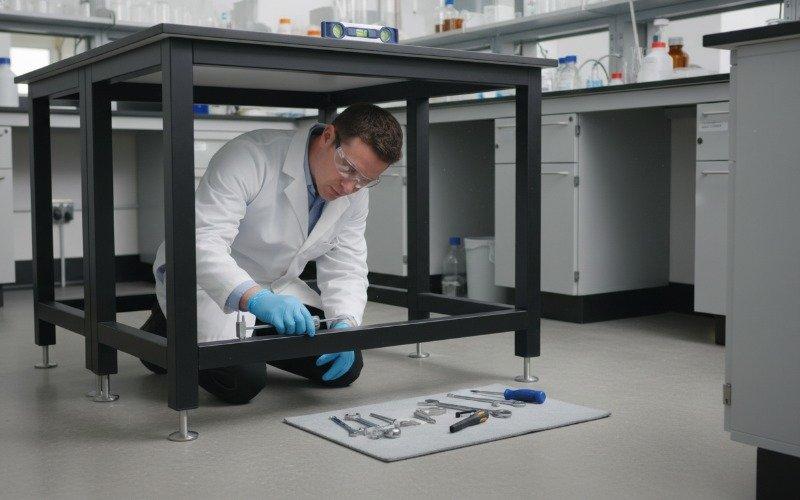
Aunque la superficie de trabajo recibe la mayor atención, la estructura del puesto de trabajo requiere igual cuidado. Una mesa de laboratorio inestable supone un grave riesgo para la seguridad, especialmente cuando los investigadores manipulan sustancias químicas volátiles. Programe una inspección mensual de todos los componentes estructurales. Compruebe los niveladores en la base de las patas de la mesa. Los suelos de las instalaciones suelen moverse, y ajustar los niveladores garantiza que la superficie de trabajo permanezca perfectamente horizontal. Inspeccione todos los elementos de fijación visibles, incluidos los pernos y tornillos que sujetan la encimera a la estructura. La vibración constante de las centrífugas de sobremesa y los mezcladores de vórtice puede provocar que estos elementos de fijación se aflojen con el tiempo. Utilice una llave dinamométrica calibrada para apretar los pernos sueltos, pero tenga cuidado de no apretarlos demasiado, ya que podría agrietar los soportes de montaje. Examine las guías de los cajones y las bisagras del armario. Aplique un lubricante de silicona seco a las guías de los cajones para garantizar un funcionamiento suave. Evite los lubricantes a base de aceite, ya que atraen polvo y partículas químicas, lo que acaba obstruyendo los mecanismos deslizantes.
Integración de sistemas de seguridad y campanas extractoras
Una mesa de laboratorio bien mantenida suele funcionar en conjunto con otros sistemas críticos de seguridad del laboratorio. Las estaciones de trabajo ubicadas directamente junto a los sistemas de ventilación química o debajo de ellos presentan patrones de desgaste diferentes a los de las mesas aisladas. Preste especial atención a las superficies dentro y alrededor de la campana extractora. El flujo de aire a alta velocidad puede arrastrar vapores químicos en suspensión sobre la superficie de la mesa, lo que acelera su degradación si no se limpia con regularidad. Asegúrese de que los deflectores y las ventanas de la campana extractora funcionen correctamente, ya que un sistema de ventilación defectuoso depositará residuos químicos corrosivos directamente sobre las mesas de laboratorio recién limpiadas. Al mantener de forma integral todo el ecosistema del laboratorio, se crea un entorno más seguro para el personal y se protege el valor a largo plazo de la infraestructura de las instalaciones.
Programa integral de mantenimiento preventivo
Implementar un cronograma estructurado garantiza que ninguna tarea de mantenimiento crítica pase desapercibida. Como técnico de mantenimiento, utilizar una lista de verificación estandarizada permite que su equipo opere de manera eficiente. La siguiente tabla describe un cronograma altamente recomendado para el mantenimiento de los muebles de su laboratorio.
| Frecuencia de mantenimiento | Tarea requerida | Herramientas y materiales necesarios |
|---|---|---|
| A diario | Limpie las superficies de trabajo para eliminar los residuos químicos y la suciedad. | Paño de microfibra, detergente suave, agua tibia. |
| Semanalmente | Limpiar a fondo todas las encimeras y desinfectar los tiradores de los cajones. | Esponja no abrasiva con 70 por ciento de alcohol isopropílico. |
| Mensual | Inspeccione los elementos estructurales, apriete los sujetadores y ajuste los deslizadores de nivelación. | Llave dinamométrica, destornilladores, nivel. |
| Trimestral | Lubrique las guías de los cajones y las bisagras de los armarios para un funcionamiento suave. | Lubricante en aerosol de silicona seca. |
| Anualmente | Realizar una auditoría exhaustiva de la superficie para detectar arañazos profundos y corrosión química. | Espejo de inspección, libro de registro de mantenimiento detallado. |
Abordar los factores ambientales y el control climático
Más allá del desgaste mecánico directo y la exposición química, el ambiente dentro de sus instalaciones juega un papel importante en la vida útil de su mobiliario de laboratorio. Las fluctuaciones extremas de humedad y temperatura pueden dañar tanto las superficies de trabajo como las estructuras subyacentes. Los altos niveles de humedad introducen un exceso de humedad en el aire del laboratorio, lo que puede acelerar el proceso de oxidación en los componentes metálicos expuestos, como las guías de los cajones, las bisagras de los gabinetes y los sujetadores estructurales. Con el tiempo, la humedad sin control provoca óxido, debilitando la integridad estructural de toda la estación de trabajo. Por el contrario, un ambiente con humedad extremadamente baja puede hacer que ciertos materiales sintéticos se vuelvan quebradizos. Mantenga una estrategia de control climático consistente asegurándose de que el sistema HVAC funcione dentro de las especificaciones recomendadas para entornos de laboratorio. Monitoree periódicamente los niveles de temperatura y humedad ambiente cerca de las estaciones de trabajo principales. Un control climático adecuado no solo protege su equipo experimental sensible, sino que también extiende drásticamente la vida útil de la mesa de laboratorio. Al estabilizar el ambiente, evita la expansión y contracción microscópica de los materiales de la mesa de laboratorio, preservando así las juntas sin fisuras y evitando fallas estructurales localizadas.
Documentación y mantenimiento de registros
La característica distintiva de un técnico experto en mantenimiento de laboratorio es el registro meticuloso de datos. Confiar en la memoria para recordar cuándo se limpió a fondo una mesa de laboratorio específica por última vez o cuándo se ajustaron los herrajes estructurales inevitablemente conlleva a la omisión de ciclos de mantenimiento. Implemente un libro de registro centralizado, digital o físico, dedicado exclusivamente al mantenimiento del mobiliario de laboratorio. Cada vez que su equipo realice una inspección programada, registre un derrame químico o reemplace un nivelador, documente la fecha exacta, la estación de trabajo específica involucrada y las acciones correctivas tomadas. Este historial de mantenimiento completo cumple múltiples propósitos vitales. Primero, garantiza la responsabilidad y proporciona un registro de auditoría claro para la administración de las instalaciones y los inspectores de seguridad. Segundo, el análisis de estos registros le ayuda a identificar problemas recurrentes. Si una mesa de laboratorio en particular experimenta repetidamente fijaciones sueltas o derrames químicos frecuentes, el registro de mantenimiento resalta esta tendencia, lo que le permite investigar la causa raíz. Tal vez los investigadores en esa estación específica necesiten capacitación adicional en seguridad, o tal vez la centrífuga de mesa necesite una recalibración para reducir la vibración. Al transformar su rutina de mantenimiento en un proceso basado en datos, pasará de reparaciones reactivas a una conservación proactiva, asegurando así la máxima vida útil de cada estación de trabajo en las instalaciones.
Restauración y reacabado de superficies dañadas
A pesar de sus mejores esfuerzos preventivos, el uso intensivo a largo plazo acabará dejando marcas en la estación de trabajo. Los pequeños arañazos en una encimera de epoxi a veces se pueden minimizar. Para rozaduras superficiales, la aplicación de un compuesto pulidor de resina especializado con una pulidora orbital puede restaurar parte del brillo original. Sin embargo, este proceso requiere una ejecución cuidadosa para evitar un desgaste irregular. Las hendiduras profundas que penetran en el material base representan un desafío mayor. Estos cortes profundos comprometen la resistencia química y pueden propiciar el crecimiento de bacterias peligrosas. En casos de daños graves, las reparaciones puntuales con kits de parches de epoxi de dos componentes pueden proporcionar una solución temporal. Para daños extensos que cubran grandes áreas, la sustitución completa de la encimera sigue siendo la estrategia a largo plazo más segura y rentable. Consulte siempre las instrucciones del fabricante original antes de intentar cualquier reparación estructural o aplicar recubrimientos de posventa a sus muebles de laboratorio.
Capacitación del personal del laboratorio sobre el uso adecuado
Sus esfuerzos de mantenimiento deben estar respaldados por los hábitos diarios del personal del laboratorio. Como técnico, parte de su función consiste en capacitar a los investigadores sobre el uso adecuado del equipo. Organice breves seminarios de seguridad que destaquen el impacto del maltrato mecánico en la mesa de laboratorio. Indique al personal que utilice siempre alfombrillas resistentes al calor al operar mecheros Bunsen o placas calefactoras. Si bien una encimera de epoxi ofrece una alta resistencia al calor, el contacto directo prolongado con temperaturas extremas puede causar choque térmico y microfracturas. Fomente el uso de tablas de cortar o alfombrillas protectoras cuando los investigadores utilicen bisturíes o instrumentos afilados. Recuerde al personal que no arrastre equipos pesados sobre la superficie de la estación de trabajo. Al promover una cultura de respeto por la infraestructura del laboratorio, reducirá significativamente la frecuencia de reparaciones de emergencia y extenderá la vida útil máxima de las mesas de laboratorio.
Preguntas frecuentes
¿Con qué frecuencia debo limpiar mi encimera de epoxi?
Debe limpiar su encimera de epoxi diariamente con un paño suave y detergente lavavajillas suave. Es fundamental limpiar inmediatamente después de derrames de productos químicos para evitar la corrosión y preservar la resistencia química de la superficie.
¿Puedo usar lejía para desinfectar mi mesa de laboratorio?
Sí, una solución estándar de lejía al 10 % es eficaz para la descontaminación biológica. Sin embargo, es necesario enjuagar bien la superficie con agua destilada posteriormente para evitar la degradación a largo plazo del acabado de resina protectora.
¿Cuál es la mejor manera de arreglar una mesa de laboratorio inestable?
Para corregir una mesa de laboratorio inestable, primero revise los niveladores ubicados en la base de las patas. Ajuste los niveladores hasta que la mesa esté perfectamente nivelada. Si el problema persiste, inspeccione y apriete todos los sujetadores estructurales con una llave dinamométrica.
¿Son seguras las esponjas de limpieza abrasivas para el mobiliario de laboratorio?
No, jamás debes usar estropajos abrasivos, lana de acero ni cepillos rígidos en el mobiliario de tu laboratorio. Las herramientas abrasivas crean arañazos microscópicos que dañan el acabado no poroso y reducen considerablemente la resistencia química de la mesa de laboratorio.
¿Las estaciones portátiles de lavado de ojos requieren un desagüe en el suelo?
No, las estaciones portátiles no requieren desagüe en el piso para su instalación. Sin embargo, al activarse, derramarán más de 15 galones de agua en el suelo. Las instalaciones deben contar con un plan para gestionar esta agua, como usar un carro de recolección o tener kits de contención de derrames listos.
¿Con qué frecuencia debo cambiar el agua de una estación portátil de lavado de ojos?
Esto depende del conservante utilizado. Con aditivos bacteriostáticos de alta calidad, el agua suele mantenerse segura hasta por 120 días (4 meses). Sin conservantes, el agua debe cambiarse semanalmente, lo cual resulta poco práctico para la mayoría de los laboratorios.
¿Puedo usar una manguera de riego como sustituto de una estación de lavado de ojos?
Según la norma ANSI Z358.1, una manguera de irrigación manual puede complementar una estación lavaojos, pero no reemplazarla. La estación lavaojos principal debe permitir que el usuario tenga ambas manos libres para mantener los párpados abiertos durante el proceso de irrigación.
https://www.zhlabsfurniture.com/wp-content/uploads/2023/03/portable-15-minute-eyewash-station.jpg 400 400 raíz https://www.zhlabsfurniture.com/wp-content/uploads/2026/08/zh-lab-logo-home-1.jpg raíz2023-01-13 13:31:492026-02-06 11:37:00Estación portátil de lavado de ojos https://www.zhlabsfurniture.com/wp-content/uploads/2023/03/drench-hose.jpg 400 400 raíz https://www.zhlabsfurniture.com/wp-content/uploads/2026/08/zh-lab-logo-home-1.jpg raíz2023-01-12 13:31:322026-01-29 21:24:34Lavaojos montado en cubierta
 https://www.zhlabsfurniture.com/wp-content/uploads/2023/03/emergency-eyewash-shower.jpg 400 400 raíz https://www.zhlabsfurniture.com/wp-content/uploads/2026/08/zh-lab-logo-home-1.jpg raíz2023-01-11 13:30:502026-01-29 21:24:30Estación de lavado de ojos con ducha de emergencia
Últimas noticias
 Phenolic Resin Countertop Maintenance & Cleaning Guide2026-10-19 - 13:11
 Características esenciales de las mesas de vestimenta eficaces para salas limpias europeas2026-07-15 - 11:03
 Ventajas del uso de mesas para salas blancas en los laboratorios: una guía para planificadores y diseñadores de laboratorios2026-06-27 - 21:19
 Los 10 principales fabricantes de mobiliario de laboratorio de China (actualización de 2026)2026-06-22 - 21:03

