

Determine how many fume hoods your laboratory needs in just a few minutes. This free Fume Hood Quantity Calculator estimates the recommended number of fume hoods based on laboratory size, number of researchers, laboratory type, chemical usage, and ventilation requirements. Whether you are planning a new laboratory or upgrading an existing facility, this calculator helps create a safer and more efficient laboratory environment.
Fume Hood Quantity Calculator
Estimate the recommended number of laboratory fume hoods, required airflow, ventilation capacity, and preliminary project budget based on laboratory size and chemical usage.
✔ ASHRAE Planning Reference ✔ Instant Recommendation ✔ Free Layout Consultation
Laboratory Information
Recommended Hood Quantity
0
Estimated Budget
$0
Required Airflow
0 CFM
Safety Rating
★★★★★
Recommended Equipment
Hood Distribution
Laboratory Space Allocation
Engineering Recommendations
Ventilation Parameters
| Recommended Face Velocity | -- |
| Air Changes per Hour | -- |
| Required Exhaust Fan | -- |
| Recommended Clearance | -- |
Need a Professional Laboratory Ventilation Design?
Our engineers can provide customized laboratory layouts, ventilation calculations, and laboratory furniture solutions based on your project requirements.
Request a Free ConsultationWhat Is a Fume Hood?
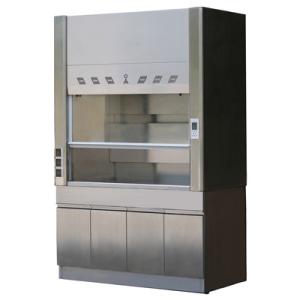
A tủ hút phòng thí nghiệm is a specialized ventilation enclosure designed to protect laboratory personnel from hazardous fumes, vapors, gases, and airborne particles generated during chemical experiments and testing. By continuously drawing contaminated air away from the user and exhausting it through a dedicated ventilation system or filtration unit, a chemical fume hood creates a safer working environment while minimizing exposure to toxic substances.
Modern lab fume hoods are widely used in educational laboratories, research institutes, hospitals, pharmaceutical manufacturing facilities, chemical plants, food testing laboratories, and industrial quality control centers. Depending on the application, laboratories may choose between ducted fume hoods, ductless filtration systems, walk-in models, or specialized acid-resistant fume hoods.
Selecting the appropriate number and type of fume hoods is equally important as choosing the equipment itself. Insufficient ventilation capacity can compromise laboratory safety, while excessive installation increases construction costs and energy consumption. Proper planning ensures efficient laboratory workflows, regulatory compliance, and long-term operational flexibility.
This Fume Hood Quantity Calculator provides an initial estimate based on laboratory size, user occupancy, chemical usage, and hazard level, helping project planners determine the recommended number of fume hoods during the early planning stage.
Why Is Proper Fume Hood Planning Important?
Proper laboratory ventilation planning goes far beyond installing a few fume hoods. A well-designed ventilation strategy directly affects laboratory safety, operational efficiency, and long-term operating costs.
Personnel Safety
Laboratory personnel are routinely exposed to hazardous chemicals, corrosive vapors, and airborne contaminants. Properly sized and strategically located fume hoods capture contaminants at the source, significantly reducing health risks and improving workplace safety.
Regulatory Compliance
Many countries require laboratories to comply with standards established by OSHA, ANSI, ASHRAE, SEFA, and local building authorities. Proper fume hood planning helps laboratories meet ventilation, containment, and exhaust performance requirements while simplifying project approvals and inspections.
Better Air Quality
Balanced laboratory ventilation improves indoor air quality by maintaining appropriate airflow, pressure relationships, and contaminant control. This creates a healthier environment for researchers while protecting sensitive experiments from cross-contamination.
Energy Savings
Laboratory ventilation often accounts for a large percentage of a building’s total energy consumption. Optimizing the number of fume hoods prevents oversized HVAC systems, lowers operating costs, and improves overall energy efficiency.
Future Expansion
Laboratories frequently expand their research capabilities over time. Planning for future growth allows additional workstations or fume hoods to be incorporated without major renovations, reducing future construction costs.
How Many Fume Hoods Does a Laboratory Need?
There is no universal answer because every laboratory operates differently. The ideal number of laboratory fume hoods depends on several engineering factors rather than floor area alone.
Laboratory Size
Larger laboratories generally require additional fume hoods to distribute ventilation evenly and avoid congestion around workstations.
Number of Researchers
The more scientists working simultaneously, the greater the demand for individual or shared fume hoods. High-occupancy laboratories often require additional units to reduce waiting time and improve productivity.
Chemical Hazard Level
Laboratories handling highly corrosive acids, toxic solvents, volatile organic compounds, or carcinogenic substances require more dedicated fume hoods than laboratories performing basic analytical work.
Laboratory Workflow
Efficient laboratory layouts separate preparation areas, analytical spaces, storage rooms, and hazardous processes. Workflow planning directly affects hood placement and quantity.
Local Building Codes
National regulations and local building authorities may specify minimum ventilation rates, face velocity, exhaust requirements, or occupancy limits that influence hood quantity.
HVAC Capacity
Even if space allows additional fume hoods, the building’s HVAC and exhaust systems must have sufficient capacity to support them. Ventilation design should always be coordinated with mechanical engineers during laboratory planning.
Recommended Number of Fume Hoods by Laboratory Type
The table below provides a general planning reference for preliminary laboratory design. Actual requirements should be verified according to local regulations and project specifications.
| Laboratory Type | Recommended Quantity |
|---|---|
| School Laboratory | 1 hood per 100 m² |
| University Laboratory | 1 hood per 80 m² |
| Hospital Laboratory | 1 hood per 70 m² |
| Pharmaceutical Laboratory | 1 hood per 60 m² |
| Chemical Laboratory | 1 hood per 50 m² |
Laboratories with intensive chemical processes or continuous research activities may require additional fume hoods beyond these baseline recommendations.
Recommended Laboratory Ventilation Standards
Proper ventilation is measured using Air Changes per Hour (ACH), indicating how many times the air inside a laboratory is replaced every hour.
| Laboratory Type | Recommended ACH |
| School Laboratory | 6–8 |
| University Laboratory | 8–10 |
| Research Laboratory | 8–12 |
| Pharmaceutical Laboratory | 10–15 |
| Chemical Laboratory | 12–15 |
Higher ACH values generally provide improved contaminant removal but also increase HVAC energy consumption. Laboratory designers should balance safety requirements with operating efficiency.
FAQ
How many fume hoods do I need?
The required quantity depends on laboratory size, user occupancy, chemical usage, hazard level, and ventilation capacity. This calculator provides a preliminary estimate for project planning.


Tin mới nhất
 Các đặc điểm thiết yếu của bàn mặc áo bảo hộ hiệu quả dành cho phòng sạch châu Âu2026-07-15 - 11:03
 Lợi ích của việc sử dụng bàn phòng sạch trong phòng thí nghiệm: Hướng dẫn dành cho các nhà quy hoạch và thiết kế phòng thí nghiệm2026-06-27 - 21:19
 Top 10 nhà sản xuất nội thất phòng thí nghiệm tại Trung Quốc (Cập nhật năm 2026)2026-06-22 - 21:03
 Tối ưu hóa năng suất phòng thí nghiệm: Thiết kế bàn thí nghiệm theo nguyên tắc công thái học2026-06-22 - 15:59
 Tiếng Việt
  English
  العربية
  Español
  Français
  Русский
  Deutsch
  हिन्दी
  Bahasa Indonesia
  日本語
日本語  한국어
한국어  മലയാളം
  ไทย
ไทย  简体中文
简体中文