Die Sicherheit des Laborpersonals zu gewährleisten, ist die wichtigste Verantwortung von Anlagenleitern und Einkäufern. Die primäre Verteidigungslinie gegen gefährliche Dämpfe, Gase und Partikel ist die Chemiedunstabzug. Die Auswahl des richtigen Containment-Systems ist nicht nur eine Kaufentscheidung, sondern eine wichtige Investition in langfristige Sicherheit und die Einhaltung gesetzlicher Vorschriften. Daher ist das Verständnis der technischen Feinheiten dieser Systeme für moderne Laborumgebungen unerlässlich.
Ob Sie ein neues pharmazeutisches Forschungszentrum ausstatten oder ein universitäres Chemielabor modernisieren möchten – der Markt bietet eine Vielzahl an Konfigurationen. Von Standard-Konstantvolumenstromanlagen bis hin zu energieeffizienten VAV-Systemen (Variable Air Volume) kann die Auswahl überwältigend sein. Daher erläutert dieser Leitfaden die wichtigsten Parameter, die Sie bei der Auswahl des perfekten Systems berücksichtigen sollten. Chemiedunstabzug für Ihre spezifische Anwendung.

Mit oder ohne Umluftkanal: Die entscheidende Entscheidung treffen
Die erste wichtige Entscheidung im Auswahlprozess ist die Wahl zwischen kanalisierten und kanallosen Technologien. Diese Entscheidung beeinflusst die Infrastrukturkosten, die Installationszeit und die betriebliche Flexibilität. Traditionelle Abluftabzüge Sie sind direkt an die HLK-Anlage des Gebäudes angeschlossen und leiten Schadstoffe nach draußen. Sie gelten als Goldstandard für Labore, die mit einer Vielzahl flüchtiger Chemikalien, giftigen Gasen oder großen Mengen an Lösungsmitteln arbeiten.
Auf der anderen Seite, Abluftlose Abzugshauben Aktivkohle- oder HEPA-Filter werden zur Luftreinigung eingesetzt, bevor die Luft wieder ins Labor zurückgeführt wird. Diese Geräte bieten hohe Flexibilität und geringere Installationskosten, da sie keine komplexen Luftkanäle benötigen. Allerdings sind sie in der Regel auf bestimmte Chemikaliengruppen und geringere Auslastungszyklen beschränkt. Daher ist ein Luftkanalsystem zwingend erforderlich, wenn Ihre Arbeitsabläufe unbekannte Reaktionen oder die extreme Erhitzung von Säuren beinhalten.
Auswahl des Auskleidungsmaterials: Haltbarkeit trifft auf Chemie
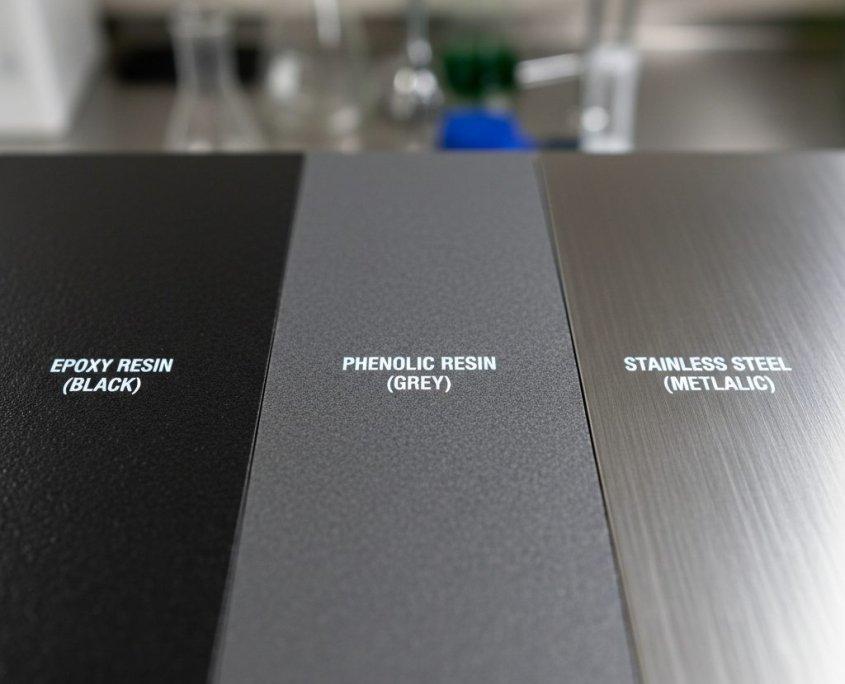
Die Innenauskleidung eines Abzugs für Chemikalien ist täglich extremen Bedingungen ausgesetzt. Daher ist es von entscheidender Bedeutung, das Auskleidungsmaterial an Ihren Chemikalienbestand anzupassen, um Korrosion zu verhindern und eine lange Lebensdauer zu gewährleisten.
- Phenolharz: Für allgemeine chemische Anwendungen ist dies eine beliebte und kostengünstige Wahl. Es bietet eine gute Beständigkeit gegen Korrosion und Feuchtigkeit, kann sich aber bei hohen Temperaturen verfärben.
- Epoxidharz: Epoxidharz ist bekannt für seine hervorragende Chemikalien- und Hitzebeständigkeit und eignet sich daher ideal für Labore, die mit starken Säuren und Basen arbeiten. Es ist ein monolithisches Material, das nicht delaminiert.
- Edelstahl (Typ 316): Für biologische Anwendungen, Radiochemie oder den Umgang mit Perchlorsäure ist Edelstahl unverzichtbar. Er lässt sich leicht dekontaminieren und ist beständig gegen aggressive Lösungsmittel.
- Glasfaserverstärkter Polyester (GFK): Dieses Material, das häufig für Allzweckhauben verwendet wird, bietet eine strahlend weiße Innenseite, die die Sicht verbessert, weist aber im Vergleich zu Epoxidharz eine geringere Hitzebeständigkeit auf.
Falls Ihr Labor auch passende Arbeitsflächen benötigt, sollten Sie unsere langlebigen Produkte in Betracht ziehen. Labortische um ein zusammenhängendes und chemikalienbeständiges Umfeld zu gewährleisten.

Luftstrom- und Fensterführung verstehen
Eine optimale Luftzirkulation ist die Grundlage für Sicherheit. Ein Abzugsschrank für Chemikalien funktioniert, indem er Luft mit einer bestimmten Anströmgeschwindigkeit vom Benutzer wegsaugt, typischerweise zwischen 18 und 30 Metern pro Minute (m/min). Ist die Geschwindigkeit zu niedrig, geht die Schutzwirkung verloren; ist sie hingegen zu hoch, können Turbulenzen zum Austreten von Schadstoffen führen.
Variables Luftvolumen (VAV) vs. Konstantes Luftvolumen (CAV)
CAV-Dunstabzugshauben führen unabhängig von der Schieberposition die gleiche Abluftmenge zu. Sie sind zwar wartungsarm, können aber energieintensiv sein. VAV-Systeme hingegen passen die Abluftmenge an die Schieberhöhe an. Obwohl VAV-Dunstabzugshauben in der Anschaffung teurer sind, reduzieren sie den Energieverbrauch im Laufe der Zeit deutlich und senken so die Gesamtbetriebskosten.
Darüber hinaus spielt die Art des Fensterflügels eine Rolle für Ergonomie und Sicherheit. Vertikale Fensterflügel sind Standard, horizontale Schiebefensterflügel können jedoch einen physischen Schutz für den Oberkörper des Benutzers während der Arbeit bieten. Kombinationsfensterflügel vereinen die Vorteile beider Varianten.
Kritischer Vergleich: Parameter von Systemen mit und ohne Umluftkanal
Um Sie bei Ihrem Beschaffungsprozess zu unterstützen, haben wir einen Vergleich der wichtigsten betrieblichen Unterschiede zwischen diesen beiden primären Dunstabzugshaubentypen zusammengestellt.
| Merkmal | Abluft-Chemikalienabzugshaube | Abluftloser Abzug |
|---|---|---|
| Installation | Komplex (erfordert Lüftungskanäle und Dachlüfter) | Einfach (Plug-and-Play) |
| Chemikalienhandhabung | Universal (Säuren, Lösungsmittel, erhitzte Chemikalien) | Spezifisch (eingeschränkt durch Filtertyp) |
| Anfangskosten | Niedrige Stückkosten, hohe Infrastrukturkosten | Höhere Stückkosten, niedrige Infrastrukturkosten |
| Wartung | Gebläsewartung, jährliche Zertifizierung | Häufiger Filterwechsel, jährliche Zertifizierung |
| Energieverbrauch | Hoch (Lüftungsöffnungen führen temperierte Außenluft zu) | Niedrig (Luftumwälzung) |
| Portabilität | Fester Standort | Mobil (kann verlegt werden) |
Konformität und Standards: SEFA und ASHRAE
Der Kauf eines Abzugs, der nicht den Branchenstandards entspricht, birgt ein hohes Haftungsrisiko. Sie müssen sicherstellen, dass jedes von Ihnen erworbene Gerät den geltenden Vorschriften entspricht. SEFA 1 Die Standards der Scientific Equipment and Furniture Association (SEA) für Design und Langlebigkeit sollten eingehalten werden. Darüber hinaus sollte das Gerät gemäß diesen Standards geprüft werden. ASHRAE 110, welche die Containment-Leistung der Haube bewertet.
Detaillierte Informationen zu den Sicherheitsprotokollen finden Sie in der OSHA-Leitfaden zur Laborsicherheit. Die Einhaltung dieser Richtlinien gewährleistet, dass Ihre Einrichtung die Inspektion besteht und schützt Ihr wertvollstes Gut: Ihre Mitarbeiter.
Wartung und Inspektion
Selbst modernste Chemikalienabzüge benötigen regelmäßige Wartung, um einwandfrei zu funktionieren. In den meisten Regionen ist die jährliche Zertifizierung durch einen qualifizierten Techniker Pflicht. Diese Zertifizierung umfasst Messungen der Anströmgeschwindigkeit und der Rauchvisualisierung, um die Dichtheit zu gewährleisten.
Darüber hinaus sollten Laborleiter einen “Fenstermanagementplan” einführen, um sicherzustellen, dass Fenster bei Nichtgebrauch geschlossen werden. Diese einfache Maßnahme spart Energie und erhöht die Sicherheit. Für umfassende Laborausstattungen sehen Sie sich unser gesamtes Sortiment an. Lüftungslösungen um passende Schränke und Accessoires zu finden.
Abschluss
Die Investition in den richtigen Abzugsschrank erfordert die Abwägung von Sicherheitsanforderungen, Budgetvorgaben und Infrastrukturmöglichkeiten. Ob Sie sich für ein robustes Abluftsystem für intensive chemische Prozesse oder ein flexibles, abluftloses System für spezielle Aufgaben entscheiden – Qualität und Konformität haben oberste Priorität. Durch das Verständnis der Auskleidungsmaterialien, der Luftströmungsdynamik und der regulatorischen Normen schaffen Sie eine sichere und produktive Arbeitsumgebung für Ihr Forschungsteam.
Häufig gestellte Fragen zu Chemikalienabzügen
Was ist die ideale Anströmgeschwindigkeit für einen Chemikalienabzug?
Die meisten Normen, darunter OSHA und SEFA, empfehlen eine Anströmgeschwindigkeit zwischen 60 und 100 Fuß pro Minute (fpm). Geschwindigkeiten über 100 fpm können Turbulenzen erzeugen, die die Rückhalteeffizienz tatsächlich verringern.
Kann ich Perchlorsäure in einem normalen Abzug verwenden?
Nein. Perchlorsäure erfordert eine spezielle Edelstahlhaube mit Spülsystem, um die Ansammlung explosiver Perchloratsalze im Abluftsystem zu verhindern.
Wie oft sollte ein Abzugsschrank zertifiziert werden?
Es wird empfohlen und ist oft gesetzlich vorgeschrieben, Ihre Abzugshauben jährlich oder immer dann zertifizieren zu lassen, wenn das Gerät versetzt oder grundlegend repariert wird.


