
 https://www.zhlabsfurniture.com/wp-content/uploads/2024/01/walk-in-fume-hood.jpg 400 400 Wurzel https://www.zhlabsfurniture.com/wp-content/uploads/2026/08/zh-lab-logo-home-1.jpg Wurzel2024-01-29 15:19:042026-05-09 14:59:46Gehen Sie im Abzug
Langes Arbeiten unter Mikroskopen, mit Mikropipetten und bei der Probenanalyse kann den Körper stark belasten. Wenn Wissenschaftler und Techniker gezwungen sind, sich an schlecht gestaltete Arbeitsplätze anzupassen, sind die Folgen vorhersehbar: chronische Schmerzen, Erschöpfung und ein spürbarer Genauigkeitsverlust. Genau deshalb ist es für jede moderne Einrichtung, die die Gesundheit ihrer Forscher und die betriebliche Effizienz optimieren möchte, unerlässlich, die Prinzipien der Ergonomie bei der Gestaltung von Laborarbeitsplätzen zu verstehen.
Indem in jeder Wissenschaft dem nutzerzentrierten Design Priorität eingeräumt wird Labortisch, Facility Manager können ihre Arbeitsbereiche von potenziellen Gefahrenzonen in Zentren des Komforts und der Innovation verwandeln. Lassen Sie uns die Kernelemente für die Gestaltung des perfekten Laborarbeitsplatzes erkunden.
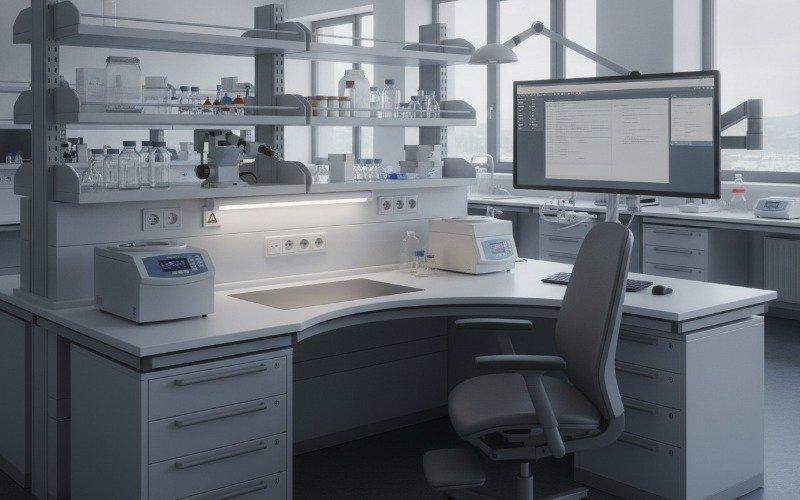
Der Kern der menschlichen Faktoren bei der Gestaltung von Laborumgebungen
Die Berücksichtigung menschlicher Faktoren bei der Gestaltung von Laborumgebungen bedeutet im Kern, den Arbeitsplatz an den Arbeiter anzupassen, anstatt den Arbeiter zur Anpassung an den Arbeitsplatz zu zwingen. Das Hauptziel einer ergonomischen Labormöbelausstattung ist die Prävention von Muskel-Skelett-Erkrankungen im Labor. Diese Erkrankungen – wie Karpaltunnelsyndrom, Rückenschmerzen und Schulterimpingement – sind in klinischen und Forschungseinrichtungen weit verbreitet.
Um dem entgegenzuwirken, muss ein moderner Laborarbeitsplatz die Prinzipien einer neutralen Körperhaltung unterstützen. Das bedeutet, dass der Körper ausgerichtet und im Gleichgewicht ist, wodurch die Belastung von Muskeln, Sehnen und Skelett minimiert wird. Wenn Laboranten mit entspannten Schultern, geraden Handgelenken und entlastetem Nacken sitzen oder stehen können, können sie länger und sicherer arbeiten.
Hauptmerkmale einer ergonomischen Laborwerkbank
Die Schaffung einer gesundheitsbewussten Umgebung erfordert mehr als nur den Kauf eines Standard-Labortisches. Es bedarf einer strategischen Auswahl anpassbarer Labormöbel für unterschiedliche Körpertypen.
Höhenverstellbarkeit: Der moderne Standard
Einer der bedeutendsten Fortschritte in der modernen Laborarbeitsplätze Der Übergang von statischen zu dynamischen Lösungen ist entscheidend. Im Vergleich von höhenverstellbaren Laborarbeitsplätzen mit solchen mit fester Höhe überzeugt die höhenverstellbare Variante in jeder Hinsicht. Ein höhenverstellbarer Laborarbeitsplatz ermöglicht den Nutzern einen nahtlosen Wechsel zwischen Sitzen und Stehen, fördert so die Durchblutung und reduziert die Belastung der Wirbelsäule.
Egal ob ein Techniker 1,57 m oder 1,93 m groß ist, eine höhenverstellbare Laborarbeitsplatzbank sorgt dafür, dass er seine Arbeit perfekt auf Ellbogenhöhe positionieren kann, was für die meisten manuellen Tätigkeiten der ergonomische Goldstandard ist.
Arbeitsbereichstiefe und Reichweitenbereiche
Die richtige Dimensionierung der Laborarbeitsfläche ist entscheidend, um Belastungen zu reduzieren. Beispielsweise liegt die optimale Tiefe für Pipettierarbeiten in der Regel zwischen 60 und 75 cm. Ist eine Laborarbeitsfläche zu tief, müssen sich die Techniker nach vorne beugen und überstrecken, was zu einer starken Belastung des unteren Rückens und der Schultern führt.
Um den Arbeitsablauf zu optimieren, sollten die korrekten Reichweitenbereiche für die Platzierung von Laborgeräten eingehalten werden:
- Primärzone (0-15 Zoll): Hier sollten häufig verwendete Utensilien wie Pipetten, Vortexmischer und Primärproben platziert werden.
- Sekundärzone (15-25 Zoll): Dieser Bereich sollte für Gegenstände reserviert werden, die nur gelegentlich verwendet werden, wie z. B. größere Reagenzflaschen oder Analysenwaagen.
- Tertiärzone (jenseits von 25 Zoll): Dieser Bereich sollte nur selten für aktive Arbeiten genutzt werden und eignet sich besser für die Langzeitlagerung oder als gelegentlicher Labortisch.
Freiraum und Beinfreiheit
Selbst die beste Laborarbeitsplatte ist nutzlos, wenn der Techniker nicht nah genug daran sitzen kann. Die empfohlene Beinfreiheit für Labortechniker beträgt mindestens 50 bis 60 cm in der Breite und 38 bis 48 cm in der Tiefe auf Kniehöhe. Wird dieser Platz durch Abfalleimer unter dem Schreibtisch oder fest installierte Schränke eingeschränkt, zwingt dies die Arbeiter zu einer verdrehten Oberkörperhaltung, was mit der Zeit zu starken Rückenschmerzen führen kann.
Aufgabenspezifische Ergonomie: Von der Mikroskopie zur Chemie
Unterschiedliche wissenschaftliche Disziplinen erfordern hochspezialisierte Laborarbeitsplätze. Was für einen Botaniker funktioniert, ist möglicherweise nicht für einen organischen Chemiker geeignet.
Mikroskopie: Die ergonomischen Anforderungen an die Labormikroskopie sind äußerst hoch, da diese Tätigkeit den Benutzer in eine statische, nach vorn geneigte Haltung zwingt. Spezielle Labortische für die Mikroskopie verfügen oft über eine Aussparung, die es dem Benutzer ermöglicht, “in” dem Tisch zu sitzen und so die Okulare näher an seine Augen zu bringen. Monitorarme und verstellbare Mikroskopstative sind ebenfalls unerlässlich, um den Nacken in einer neutralen, aufrechten Position zu halten.
Probenvorbereitung: Um das Risiko von Überlastungsschäden bei der Probenvorbereitung zu verringern, ist ein gut organisierter Laborarbeitsplatz erforderlich. Techniken wie das abwechselnde Führen der Proben mit den Händen, die Verwendung elektronischer Pipetten und die Nutzung gepolsterter Armlehnen am Rand des Laborarbeitsplatzes können den Druck auf Handgelenke und Unterarme deutlich reduzieren.
Chemie und Nasslabore: Bei der Ausstattung von Chemielaboren mit ergonomischen Arbeitsflächen ist die Auswahl optimaler Materialien von größter Bedeutung. Matt beschichtete Epoxid- oder Phenolharze eignen sich hervorragend, da sie beständig gegen aggressive Chemikalien sind und gleichzeitig die Blendwirkung von oben reduzieren, wodurch die Augenbelastung verringert wird.
Organisation und intelligente Laborlayouts
Wenn Sie sich fragen, wie man ein ergonomisches Laborlayout gestaltet, liegt das Geheimnis in einem reibungslosen Arbeitsablauf und der Vermeidung von Unordnung. Ein beengter Arbeitsplatz zwingt zu unnatürlichen Körperhaltungen.
Um die Laborarbeitsplätze frei zu halten, müssen Einrichtungen in integrierte Aufbewahrungslösungen für ergonomische Laborlayouts investieren. Mobile Rollcontainer, verstellbare Hängeregale und Wandsteckplatten gewährleisten, dass Werkzeuge leicht zugänglich sind, ohne die Hauptarbeitsfläche zu blockieren. Ein separater Labortisch neben den Hauptarbeitsplätzen bietet Platz für schwere, vibrierende Geräte wie Zentrifugen und sorgt so für einen ruhigen, stabilen und geräumigen Arbeitsbereich.
Der Einfluss der Labortischgestaltung auf die Laborproduktivität
Es ist ein weit verbreiteter Irrglaube, dass ergonomische Verbesserungen lediglich eine Pflichterfüllung im Bereich Gesundheit und Sicherheit darstellen. Tatsächlich ist der Einfluss der Arbeitsplatzgestaltung auf die Produktivität im Labor enorm.
Wenn Wissenschaftler nicht durch Nackenverspannungen, Rückenschmerzen oder Augenbelastung abgelenkt werden, steigern sich ihre Konzentration und Präzision ganz natürlich. Ergonomische Labortische reduzieren menschliche Fehler, verringern das Risiko fallengelassener oder falsch behandelter Proben und minimieren Fehlzeiten aufgrund von Physiotherapie oder Krankheit.
Praktische Tipps zur Modernisierung Ihres Laborraums:
- Überprüfen Sie Ihre aktuelle Konfiguration: Beobachten Sie, wie die Techniker mit ihren aktuellen Laborarbeitsplätzen umgehen. Sitzen sie krumm? Greifen sie zu weit nach hinten?
- Investieren Sie in Anpassungsfähigkeit: Ersetzen Sie starre Tische durch mindestens einige höhenverstellbare Arbeitsplätze, um unterschiedlichen Schichten und Körpertypen gerecht zu werden.
- Arbeitsbereiche aufräumen: Regale einführen, um den Hauptbereich freizumachen Labortisch, wichtige Werkzeuge in sicherer Reichweite aufbewahren.
- Benutzer konsultieren: Fragen Sie Ihre Techniker, was ihnen während ihrer Schichten körperliche Beschwerden bereitet. Ihre Erkenntnisse sind bei der Auswahl neuer Laborarbeitsplätze von unschätzbarem Wert.
Letztendlich ist die Priorisierung von Ergonomie in Ihrem Labor eine Investition in Ihr wertvollstes Gut: Ihr wissenschaftliches Team. Durch die Integration höhenverstellbarer Arbeitsplätze, optimaler Reichweite und aufgabenspezifischer Designs in die Planung Ihrer Labortische schaffen Sie eine Umgebung, in der Gesundheit, Komfort und bahnbrechende Entdeckungen Hand in Hand gehen.
Welcher Labortyp ist am häufigsten?
Klinische Labore sind am weitesten verbreitet, da sie für Gesundheitssysteme weltweit unerlässlich sind, um Patiententests durchzuführen und diagnostische Daten bereitzustellen.
Worin besteht der Unterschied zwischen BSL-1 und BSL-2?
In Laboren der Sicherheitsstufe BSL-1 werden nicht-pathogene Erreger gehandhabt, während in Laboren der Sicherheitsstufe BSL-2 Erreger mit mittlerem Risiko gehandhabt werden, die einen eingeschränkten Zugang und biologische Sicherheitswerkbänke für aerosolgenerierende Verfahren erfordern.
Warum ist die SEFA-Zertifizierung für Labormöbel wichtig?
Die SEFA-Zertifizierung gewährleistet, dass Labormöbel strenge Sicherheits- und Haltbarkeitsstandards erfüllen und das Personal vor Chemikalienunfällen und strukturellen Mängeln schützen.
Wozu werden Reinräume verwendet?
Reinräume werden für Prozesse eingesetzt, die sehr empfindlich auf Umwelteinflüsse reagieren, wie beispielsweise die pharmazeutische Herstellung, die biotechnologische Forschung und die Mikroelektronikproduktion.
Welche Materialien werden am häufigsten für Laborarbeitsplatten verwendet?
Die gebräuchlichsten Materialien sind Epoxidharz und Phenolharz. Epoxidharz wird aufgrund seiner überlegenen Hitze- und Chemikalienbeständigkeit in Chemielaboren bevorzugt, während Phenolharz aufgrund seiner antimikrobiellen Eigenschaften und seiner Langlebigkeit in biologischen und klinischen Laboren eingesetzt wird.
Warum werden modulare Labormöbel zum Industriestandard?
Modulare Möbel ermöglichen es Laboren, schnell und ohne nennenswerte Ausfallzeiten zu skalieren und umzugestalten. Angesichts der rasanten technologischen Entwicklung müssen Labore häufig ihre Ausrüstung modernisieren oder ihren Forschungsschwerpunkt ändern; modulare Systeme reduzieren die langfristigen Renovierungskosten um etwa 251 bis 401 Tonnen.
https://www.zhlabsfurniture.com/wp-content/uploads/2024/01/walk-in-fume-hood.jpg 400 400 Wurzel https://www.zhlabsfurniture.com/wp-content/uploads/2026/08/zh-lab-logo-home-1.jpg Wurzel2024-01-29 15:19:042026-05-09 14:59:46Gehen Sie im Abzug https://www.zhlabsfurniture.com/wp-content/uploads/2024/01/stainless-steel-fume-hood-for-laboratories.jpg 400 400 Wurzel https://www.zhlabsfurniture.com/wp-content/uploads/2026/08/zh-lab-logo-home-1.jpg Wurzel2024-01-29 14:50:142026-05-09 15:00:10Abzugshaube aus Edelstahl
 https://www.zhlabsfurniture.com/wp-content/uploads/2024/01/bench-top-fume-hood.jpg 400 400 Wurzel https://www.zhlabsfurniture.com/wp-content/uploads/2026/08/zh-lab-logo-home-1.jpg Wurzel2024-01-29 14:32:162026-05-09 15:00:35Lehrabzug
 https://www.zhlabsfurniture.com/wp-content/uploads/2024/01/chemical-fume-hoods-1.jpg 400 400 Wurzel https://www.zhlabsfurniture.com/wp-content/uploads/2026/08/zh-lab-logo-home-1.jpg Wurzel2024-01-29 11:06:272026-05-09 15:01:43Chemie-Abzugshaube
 https://www.zhlabsfurniture.com/wp-content/uploads/2024/01/acid-fume-hood.jpg 400 400 Wurzel https://www.zhlabsfurniture.com/wp-content/uploads/2026/08/zh-lab-logo-home-1.jpg Wurzel2024-01-26 13:30:252026-01-29 21:25:25Säureabzugshaube
 https://www.zhlabsfurniture.com/wp-content/uploads/2023/03/wood-lab-workstaion-casework.jpg 400 400 Wurzel https://www.zhlabsfurniture.com/wp-content/uploads/2026/08/zh-lab-logo-home-1.jpg Wurzel2023-01-03 13:10:482026-10-22 10:53:36Labortisch aus Holz
 https://www.zhlabsfurniture.com/wp-content/uploads/2023/03/phenolic-resin-lab-bench.jpg 400 400 Wurzel https://www.zhlabsfurniture.com/wp-content/uploads/2026/08/zh-lab-logo-home-1.jpg Wurzel2023-01-02 13:12:472026-01-29 21:28:21Phenolharz-Labortisch
 https://www.zhlabsfurniture.com/wp-content/uploads/2023/03/steel-lab-benches.jpg 400 400 Wurzel https://www.zhlabsfurniture.com/wp-content/uploads/2026/08/zh-lab-logo-home-1.jpg Wurzel2023-01-01 13:11:292026-05-09 14:52:44Labortisch aus Stahl
Neueste Nachrichten
 Phenolic Resin Countertop Maintenance & Cleaning Guide2026-10-19 - 13:11
 Wesentliche Merkmale effektiver Umkleidebänke für europäische Reinräume2026-07-15 - 11:03
 Vorteile des Einsatzes von Reinraumtischen in Laboren: Ein Leitfaden für Laborplaner und -gestalter2026-06-27 - 21:19
 Die 10 führenden Hersteller von Labormöbeln in China (Stand: 2026)2026-06-22 - 21:03

